

PTFE Teflon Brake Hose: Engineering, Quality Control and Custom Assembly Solutions
Brake hose selection is an important engineering decision for automotive manufacturers, motorcycle brands, performance parts distributors, and aftermarket workshops. As vehicles and custom braking systems require different connection layouts and installation configurations, buyers need to evaluate hose materials, reinforcement structures, fittings, dimensional accuracy, and product validation together.
PTFE-lined brake hoses, commonly referred to as Teflon brake hoses, are used in suitable hydraulic applications where chemical compatibility, controlled expansion, and application-specific temperature capability are important considerations. Their suitability depends on the complete hose assembly and the requirements of the intended braking system.
For manufacturers and international buyers, the objective is not simply to select a particular material. It is to specify a complete assembly that can be manufactured consistently, installed correctly, and validated against the applicable engineering and regulatory requirements.
1. What Is a PTFE or Teflon Brake Hose?
PTFE stands for polytetrafluoroethylene, a fluoropolymer known for broad chemical resistance and a wide potential operating-temperature range. Teflon is a trade name associated with PTFE products. In a PTFE-lined brake hose, the inner liner is combined with a reinforcement structure and, where required, an external protective layer.
The terms PTFE brake hose, Teflon brake hose, and PTFE brake line are often used interchangeably in aftermarket product searches. However, they do not guarantee identical construction, pressure ratings, end fittings, or regulatory status. Buyers should review the actual product specification before making a selection.
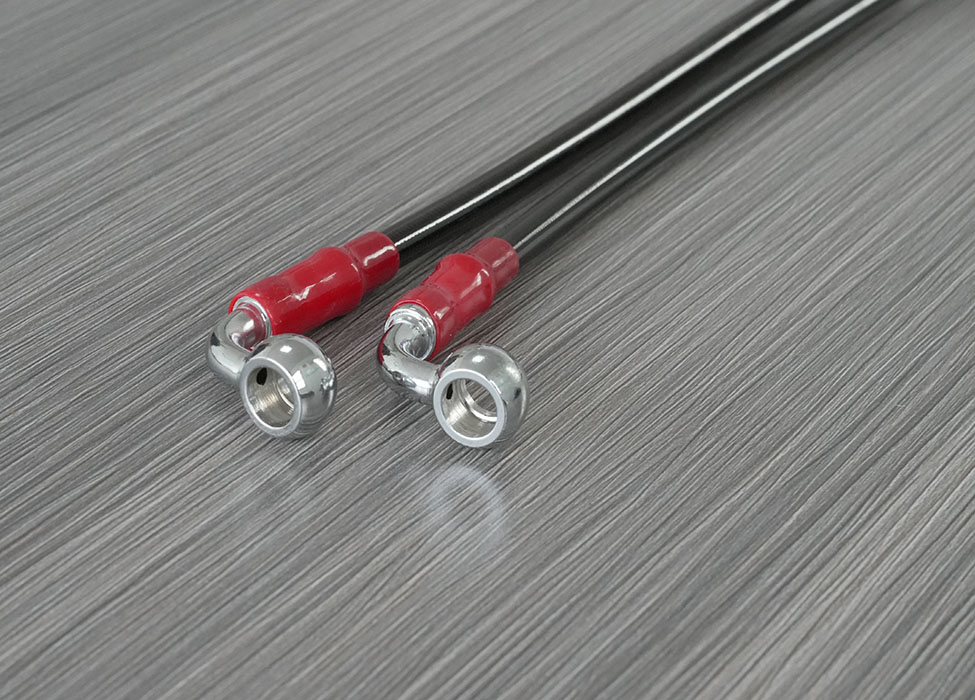
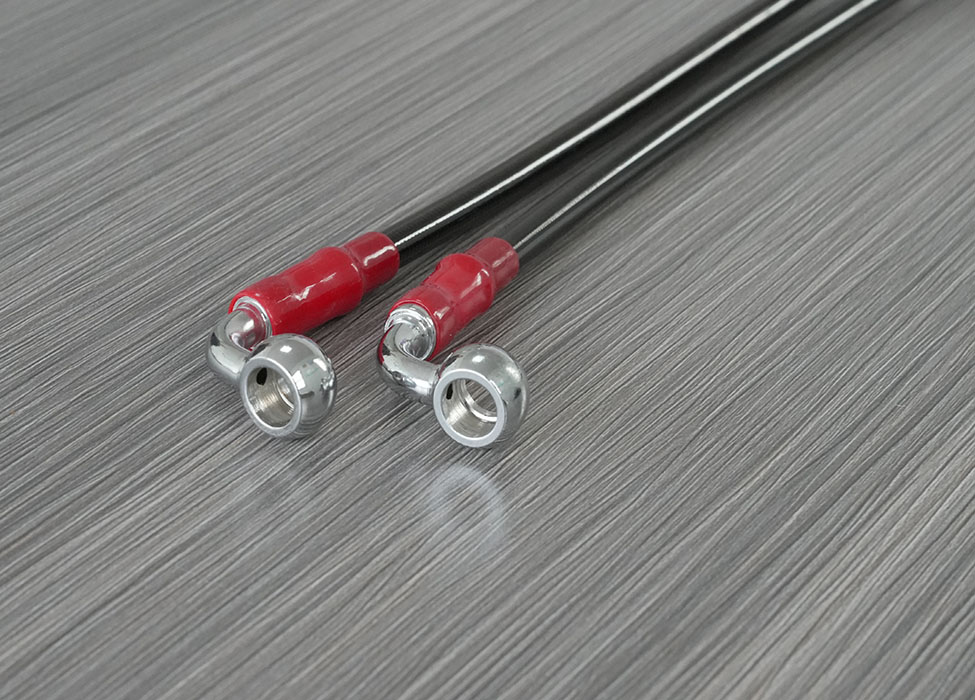
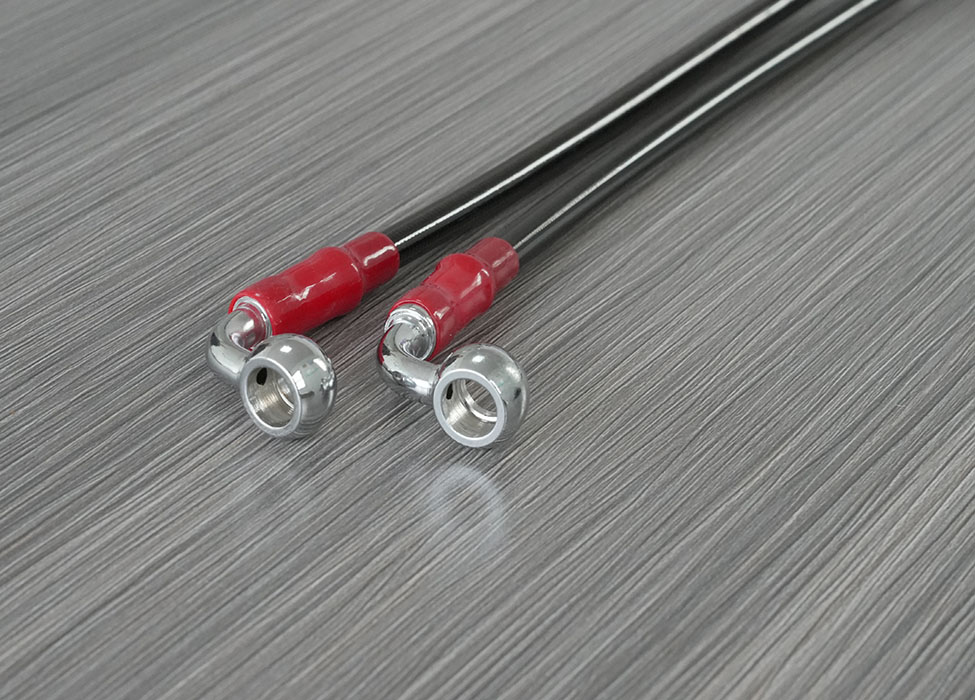
Typical construction of a PTFE brake hose assembly
- PTFE inner liner: Provides the fluid-contact surface and must be compatible with the specified brake fluid and service conditions.
- Reinforcement layer: Helps withstand hydraulic pressure and control expansion. Depending on the design, this may include stainless steel wire braid or another qualified reinforcement structure.
- Protective outer layer: May provide additional resistance to abrasion or environmental exposure when required by the installation environment.
- End fittings: Provide the specified connection geometry, sealing method, and mechanical interface with the vehicle's hydraulic system.
- Crimped or otherwise qualified connections: Secure the hose to its end fittings using a manufacturing process appropriate to the assembly design.
Every layer contributes to the final product's performance. A suitable liner cannot compensate for an incorrectly selected fitting, poor connection geometry, inadequate reinforcement, or an unsuitable manufacturing process.
2. Engineering Advantages of PTFE Brake Lines
Controlled expansion under hydraulic pressure
A properly designed PTFE liner and reinforcement combination can help limit hose expansion under hydraulic pressure. In suitable applications, controlled expansion may contribute to a more consistent brake pedal or lever feel.
The actual behavior depends on the complete assembly, including hose dimensions, reinforcement design, fitting connections, length, and installation. It should be evaluated using appropriate engineering data and test methods rather than inferred from the material name alone.
Broad chemical resistance
PTFE offers broad resistance to many chemicals and is used in demanding fluid-handling applications. However, compatibility must be established for the complete brake hose assembly, including seals, end fittings, protective materials, and the exact brake fluid specified for the vehicle.
Temperature capability
PTFE can operate over a broad temperature range, but the allowable operating range of the finished brake hose is determined by the complete construction. Reinforcement, fittings, seals, external protection, and assembly design may impose more restrictive limits than the liner itself.
Flexible configurations for custom applications
Custom hose lengths, fitting orientations, connection styles, and protective sleeves can help accommodate different vehicle layouts. This flexibility is useful for certain performance applications, motorcycle configurations, and specialized replacement assemblies.
Custom dimensions must still be verified against the intended installation. A hose should not be stretched, twisted, sharply bent, or routed close to components that could damage it during normal vehicle movement.
3. Stainless Steel Braided PTFE Brake Hose: What Matters?
Stainless steel braided PTFE brake hose combines a PTFE inner liner with a metallic reinforcement structure. The design may provide controlled expansion and mechanical reinforcement for suitable applications, but the presence of stainless steel braid alone does not establish the assembly's pressure capability, durability, or regulatory compliance.
Important design considerations
- Liner specification: Confirm the dimensions, material requirements, and suitability for the intended brake fluid.
- Braid and reinforcement: Confirm that the reinforcement construction meets the required mechanical and hydraulic performance criteria.
- End-fitting compatibility: Check thread type, pitch, sealing geometry, material, and orientation.
- Connection integrity: Verify that the fitting and attachment method are appropriate for the exact hose construction.
- External protection: Determine whether an additional cover or sleeve is required for abrasion, heat exposure, or contact protection.
- Installation geometry: Check finished length, bend radius requirements, movement clearance, and freedom from twisting.
Product performance must be established for the complete assembly. A generic braid description or material certificate is not a substitute for application-specific qualification and testing.
4. PTFE Brake Hose vs. Rubber and Nylon Hose Products
PTFE brake hose
PTFE-lined assemblies may be suitable where their chemical compatibility, pressure behavior, temperature capability, and construction meet the intended application requirements. The complete assembly specification should be reviewed before selecting a product for hydraulic brake service.
Rubber brake hose assembly
Rubber brake hoses are widely used in original equipment and replacement applications. A correctly specified rubber assembly may be an appropriate choice where it meets the vehicle manufacturer's requirements. Buyers should compare verified specifications rather than assuming that one material is universally superior.
Nylon brake hose products
Nylon hoses are used in various fluid-transfer, pneumatic, and automotive applications, depending on their construction. A general-purpose nylon hose must not be assumed suitable for a hydraulic braking system.
Only an assembly expressly engineered, pressure-rated, and approved for the intended hydraulic brake application should be considered for brake service. Buyers should confirm the product's intended function, compatibility, and supporting documentation.
5. CCC Certification and International Compliance Considerations
International buyers should distinguish between material specifications, manufacturing quality documentation, performance test reports, and statutory product approvals. These documents serve different purposes and should not be treated as interchangeable.
CCC commonly refers to China Compulsory Certification. Whether a particular brake hose or brake line product falls within an applicable compulsory certification requirement depends on the current certification catalogue, product classification, and relevant regulatory scope.
What should be verified before making a certification claim?
- Whether the exact product category is covered by the applicable compulsory certification requirements.
- Which technical standards and testing requirements apply to the product and intended vehicle category.
- Whether any certificate is valid, authentic, and applicable to the exact product, manufacturer, and production scope.
- Whether additional requirements apply in the destination market.
- Whether supporting test reports, inspection records, and traceability documents are available where required.
A PTFE material specification does not establish CCC certification. Likewise, passing an individual pressure test does not automatically mean that a product has obtained a statutory approval or satisfies every requirement for road use.
For Southeast Asian, Middle Eastern, Japanese, South Korean, and African markets, buyers should identify the applicable rules for the destination country and intended use. Requirements may differ for road-going vehicles, competition vehicles, replacement components, and custom assemblies.
6. Manufacturing Quality Control for PTFE Brake Line Assemblies
A reliable brake hose assembly requires controlled manufacturing processes and appropriate verification. For a manufacturer supplying distributors, performance brands, and OEM customers, quality control should cover incoming materials, dimensions, connection integrity, finished assembly inspection, and application-specific validation.
Incoming material and component checks
Verify the specified liner, reinforcement, fittings, seals, and protective materials. Where required, maintain supplier documentation, material identification, and batch traceability.
Dimensional and fitting inspection
Measure the finished length according to the approved drawing and confirm the fitting thread, pitch, orientation, sealing surface, and crimp dimensions. Where relevant, establish clear measurement references so that production dimensions can be checked consistently.
Pressure and durability validation
Testing should be selected according to the applicable product requirements and a documented validation plan. Depending on the intended application, appropriate tests may include pressure resistance, leakage, temperature exposure, impulse or durability testing, and other specified performance evaluations.
Test methods, equipment, acceptance criteria, and sampling plans should be established by qualified personnel. A single successful pressure test cannot independently establish long-term durability or suitability for every operating condition.
Finished assembly inspection
Before release, verify the required dimensions, fitting orientation, connection integrity, identification, and packaging condition. Maintain inspection and production records according to the applicable quality system and customer requirements.
Installation and application review
Correct installation is part of the overall engineering solution. Verify that the finished hose has sufficient clearance, does not twist or stretch, and remains free from interference throughout the permitted steering and suspension movement.
7. How to Specify a Custom Brake Hose Assembly
For OEM buyers, aftermarket brands, distributors, and motorcycle workshops, a complete technical specification helps reduce quotation errors, fitting mismatches, and unnecessary production revisions.
Information to include in a quotation request
- Vehicle make, model, year, and intended brake system application.
- Hose construction and material requirements.
- Finished length and measurement reference.
- End-fitting type, thread specification, sealing geometry, and orientation.
- Required operating pressure, temperature range, and brake fluid specification.
- Protective cover, sleeve, packaging, labeling, and identification requirements.
- Applicable approvals, test reports, inspection records, and traceability requirements.
- Target quantity, order frequency, destination market, and required delivery schedule.
A technical drawing or physical sample can help clarify the intended configuration. However, a sample should be reviewed against the actual application requirements rather than treated as proof of compliance on its own.
8. Explore Brake Hose and Assembly Products
The following product categories provide a starting point for reviewing different hose constructions and assembly configurations. Confirm the intended application and technical specifications before selecting any product for hydraulic brake service.
PTFE and Teflon brake hose solutions
- Teflon Brake Hose – review PTFE-based hose options and application-specific construction requirements.
- PTFE Brake Line Assembly – explore complete assemblies with specified dimensions and end fittings.
Additional hose and assembly categories
- Nylon Brake Hose – review the specified application and confirm hydraulic brake suitability where relevant.
- Nylon Brake Hose Assembly – review the complete assembly specification and documented intended use.
- Rubber Brake Hose Assembly – review rubber-based assemblies for applications where they meet the required specifications.
Product category names alone do not establish suitability for hydraulic braking. The actual product construction, pressure rating, fluid compatibility, connection design, validation, and applicable approvals must be confirmed before use.
9. Brake Hose Maintenance and Service Life
Even a correctly manufactured PTFE brake hose requires suitable installation, inspection, and maintenance. Follow the vehicle and assembly manufacturer's service instructions, and increase inspection attention when the vehicle operates under severe conditions.
Recommended inspection points
- Check the hose for leakage, cuts, abrasion, bulges, exposed reinforcement, and other visible damage.
- Inspect fittings, crimped connections, and sealing areas for leakage or deterioration.
- Confirm that the hose does not twist, kink, stretch, or rub against nearby components.
- Check clearance throughout the permitted steering and suspension travel.
- Replace damaged assemblies and follow the specified bleeding and functional testing procedures after hydraulic work.
There is no single replacement interval that applies to every hose and vehicle. Follow the relevant manufacturer's instructions and replace an assembly when required by the service schedule or when it fails inspection.
10. Frequently Asked Questions About PTFE Brake Hoses
What is the difference between PTFE and Teflon brake hose?
PTFE is the material name, while Teflon is a trade name associated with PTFE products. Buyers should confirm the actual liner specification, reinforcement, fittings, ratings, and intended application.
Does stainless steel braided PTFE hose automatically improve braking performance?
No. A properly engineered assembly may help control expansion and provide a more consistent brake feel in suitable applications. Actual braking performance depends on the complete brake system, product specification, and installation.
Is every PTFE brake hose compatible with every brake fluid?
No. Although PTFE offers broad chemical resistance, compatibility must be verified for the complete assembly, including fittings, seals, and other materials. Use only products specified for the intended fluid and operating conditions.
Does every PTFE brake hose have CCC certification?
No. Certification depends on the applicable regulatory scope and the exact product. Verify any certification claim against the relevant requirements rather than inferring certification from the material or product name.
Can a manufacturer produce custom brake hose assemblies from drawings?
Custom manufacturing may be possible when the application requirements are clearly defined. Provide the drawing or sample, length, fitting specifications, operating conditions, quantity, and destination market for technical review.
11. Request a Custom PTFE Brake Hose Assembly
For OEM manufacturers, performance parts brands, distributors, and motorcycle workshops, early technical communication can help establish the correct configuration before production begins.
When requesting a quotation, include the intended application, finished length, fitting specifications, operating pressure, temperature range, brake fluid, required documentation, target quantity, and destination market. Drawings and samples can help clarify the assembly requirements.
For technical drawings, custom configurations, and product inquiries, visit Contact Us for Custom PTFE Brake Hose Solutions.
12. Related Technical Guides
- Can Brake Hoses Be Repaired? Replacement and Inspection Guide
- Brake Hose vs. Brake Hard Line: Materials and Performance
Engineering note: Brake hoses are safety-critical hydraulic components. Material selection, assembly design, manufacturing, testing, and installation must comply with the applicable vehicle requirements, product specifications, and local regulations.