

How Motorcycle Brake Hose Routing Affects Braking Performance
Motorcycle brake hose routing is often overlooked when upgrading a braking system. Riders usually focus on the brake caliper, master cylinder, brake pads and brake hose material, but the way the hose is routed can also affect brake system reliability, lever feel and long-term durability.
A properly designed brake hose should follow a controlled path while maintaining sufficient clearance from the wheel, fork, frame, exhaust and other moving components. For modified motorcycles, correct routing becomes even more important because handlebars, forks, calipers and master cylinders may be different from the original configuration.
Why Brake Hose Routing Matters
A brake hose operates under hydraulic pressure and may also experience movement caused by steering, suspension travel and vibration. If the hose is forced into an unsuitable position, unnecessary mechanical stress can be transferred to the hose body and fittings.
Correct Routing Helps Maintain Consistent Brake Response
When a brake hose is correctly installed without excessive twisting, sharp bends or unnecessary tension, the hydraulic system can operate more consistently.
For performance-oriented motorcycles, reinforced can be selected when the application requires a PTFE inner tube combined with a reinforced outer construction.
Compared with simply replacing a hose with another hose of the same length, a properly specified modified brake line can take hose length, fitting orientation, routing position and application requirements into account.
How Incorrect Routing Can Affect Brake Hose Performance
1. Excessive Bending
A brake hose should not be forced into a sharp bend immediately behind the fitting. Excessive bending can place additional stress on the hose construction and fitting area.
The actual minimum bend radius depends on the specific hose construction and size, so the manufacturer's specification should always be followed.
2. Hose Twisting
Twisting is another common routing problem. A hose should be installed in its intended orientation rather than rotated to force the fitting into position.
During installation, both ends of the hose should be aligned correctly before final tightening. A twisted hose can experience additional mechanical stress during pressure cycles and movement.
3. Insufficient Clearance
The hose must have enough clearance from the tire, wheel, brake disc, fork, frame and other moving parts.
Turn the handlebars fully from left to right after installation and check the entire hose path. The hose should not become stretched, pinched or trapped at either steering limit.
Brake Hose Routing for Modified Motorcycles
Modified motorcycles often require a different brake hose configuration from the original factory setup.
Changing the handlebar, front fork, brake caliper or master cylinder can change the distance and angle between connection points. In these situations, forcing the original hose into a new position is not always the best solution.
Custom Length and Fitting Orientation
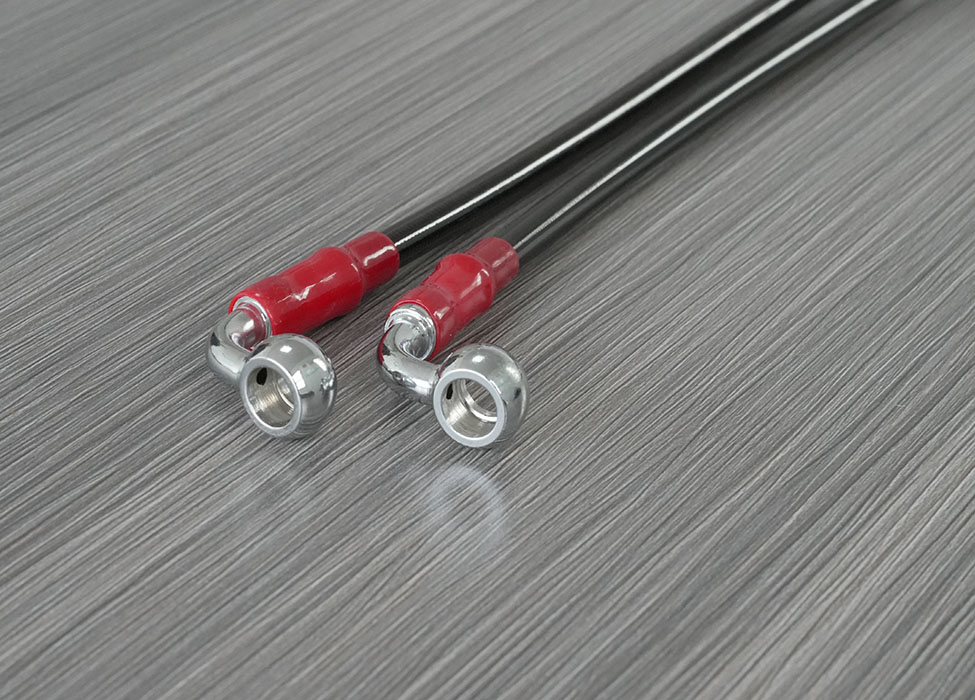
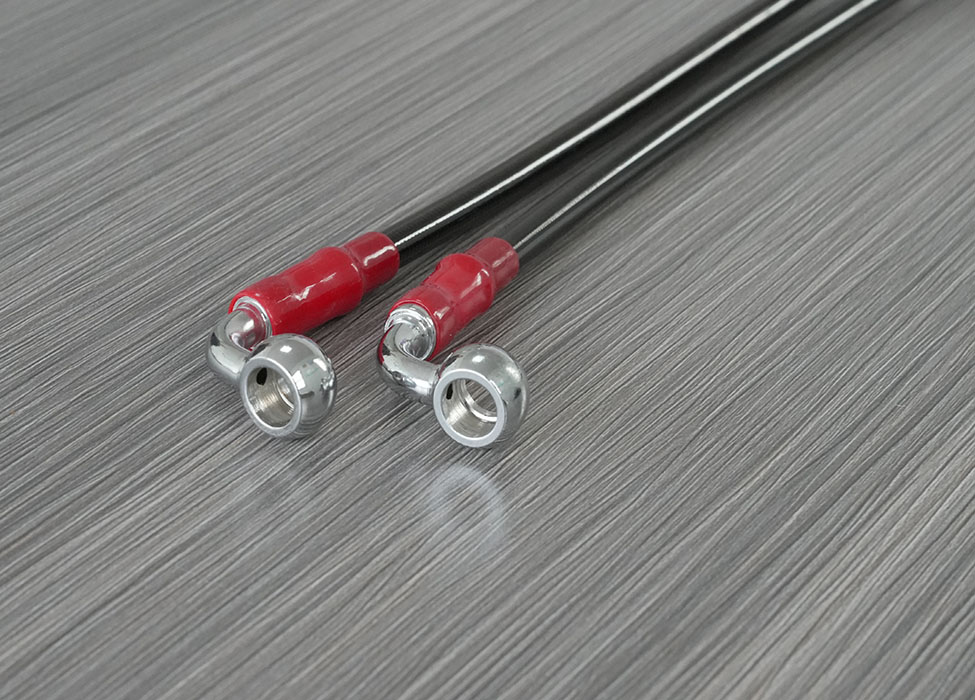
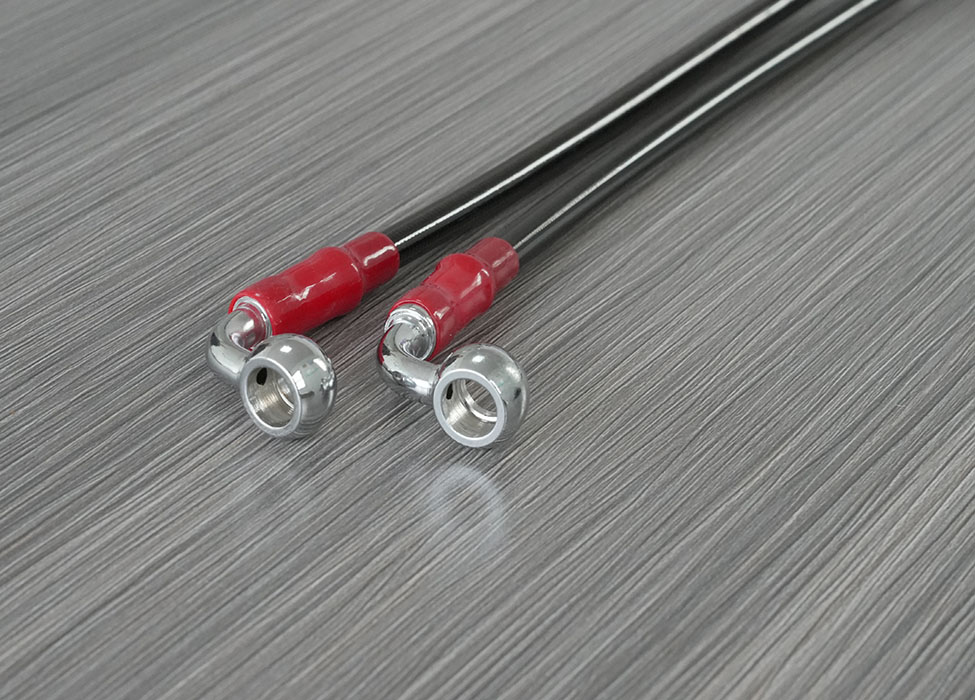
A custom or reinforced brake hose assembly can be manufactured according to the required hose length, fitting type and fitting orientation.
For motorcycle manufacturers, distributors and modification shops, this allows the brake hose to follow the intended routing instead of using excessive loops or sharp bends to compensate for an incorrect hose length.
Routing Considerations for Different Motorcycle Applications
Motorcycle Brake Lines
For Motorcycle brake lines, the most important considerations include steering movement, suspension travel, hose length, fitting orientation and clearance from hot or moving components.
Scooter Brake Lines
Scooter brake lines often require compact routing around the steering head and front suspension. A correctly specified hose length can help reduce unnecessary loops and contact points.
Car Brake Lines and SUV Brake Lines
The same basic routing principles also apply to Car brake lines and SUV brake lines. Brake hoses should be protected from excessive bending, abrasion, heat and interference with suspension movement.
Modified Car Oil Pipe
For a Modified car oil pipe application, routing should also consider engine movement, heat exposure, vibration and available installation space. Custom hose length and fitting orientation can simplify the final installation.
Why Upgraded Brake Hoses Can Make Routing Easier
A modified brake hose is not only about changing the appearance of the motorcycle. For professional applications, customization can include hose construction, length, fitting type, fitting angle and protective covering.
For example, can be configured for applications requiring a PTFE inner tube and a suitable reinforcement structure.
For standard applications, may also be appropriate when flexibility and OEM-style construction are required.
Practical Brake Hose Routing Checklist
- Check the hose length before installation.
- Avoid twisting the hose during assembly.
- Do not exceed the manufacturer's minimum bend radius.
- Keep the hose away from the tire and brake disc.
- Check clearance throughout full steering movement.
- Check suspension movement where applicable.
- Avoid unnecessary contact with sharp edges.
- Keep the hose away from excessive heat sources.
- Confirm fitting orientation before final tightening.
Conclusion
Motorcycle brake hose routing has a direct relationship with installation quality, hose durability and braking system reliability. A high-quality hose cannot compensate for incorrect routing.
For modified motorcycles, the combination of correct hose construction, accurate length, suitable fitting orientation and proper routing provides a more professional brake hose solution.
For B2B buyers, motorcycle workshops and brake component distributors, customized brake hose assemblies can also simplify installation across different motorcycle models and modification configurations.