

Car Brake Hose Bending Symptoms: How Incorrect Routing Can Affect Brake Hose Performance
Brake hoses are exposed to pressure, vibration, temperature changes and repeated movement during vehicle operation. In cars and SUVs, incorrect hose routing can create mechanical stress even when there is no immediate visible leakage.
One of the most common installation problems is excessive bending. A brake hose should normally follow a controlled curve with sufficient clearance from the wheel, suspension and other components.
Symptoms of a Bent or Misrouted Brake Hose
Visible Kinking
A hose with a sharp fold or kink should be inspected carefully. The deformation may indicate that the hose length, fitting orientation or routing position is not suitable.
Flattened Hose Section
A localized flattened section can indicate excessive bending, compression or contact with another component.
Do not assume that a hose is acceptable simply because there is no brake fluid leakage. Mechanical damage can develop before an obvious hydraulic failure occurs.
Twisting Around the Fitting
The hose should not be forced to rotate to compensate for an incorrect fitting angle.
If the hose is twisted during installation, the stress can be transferred to the fitting and crimped area.
Abnormal Abrasion
Rubbing against the suspension, wheel, chassis or bracket can gradually damage the outer surface of the hose.
Vehicles operating on rough roads or in environments with dust, mud, salt and moisture may require more frequent visual inspection.
Brake Hose Becomes Tight During Suspension Movement
The hose needs enough length and suitable routing to accommodate normal suspension movement. A hose that becomes tight at full suspension travel should be corrected before regular use.
Main Causes of Brake Hose Bending Problems
Wrong Hose Length
Length is one of the most important parameters when ordering a custom brake hose.
Too short can create tension. Too long can create unnecessary loops and increase the possibility of contact with other components.
Incorrect Fitting Angle
Fitting orientation should be considered together with hose length. The correct length with the wrong fitting angle can still result in poor routing.
Insufficient Clearance
The hose should be positioned away from rotating components, sharp edges and areas where it can be continuously rubbed.
Changes to the Original Brake System
Brake caliper upgrades, wheel changes, suspension modifications and other vehicle modifications can change the original brake hose routing.
This is where a customized modified car oil pipe can be more practical than simply reusing an original hose.
Why Customized Brake Hoses Are Important for Modified Vehicles
A modified brake system should be considered as a complete assembly rather than a collection of individual parts.
When the master cylinder, caliper, suspension or wheel configuration changes, the hose may require a different length, fitting angle or connection specification.
A custom brake hose allows these parameters to be defined before production.
Modified Car Oil Pipe
For modified cars, the hose may need to follow a different route from the original vehicle configuration.
Our Modified car oil pipe solutions can be customized according to customer drawings, samples and installation requirements.
For development projects, buyers can provide the original hose, fitting information, photos or drawings. This helps confirm the required length, fitting orientation and connection specifications before mass production.
Car Brake Lines
Passenger cars require brake hoses that can withstand hydraulic pressure while accommodating normal suspension and steering movement.
Our Car brake lines can be manufactured according to different vehicle applications and customer specifications.
SUV Brake Lines
SUVs may have different suspension travel, chassis layouts and operating environments compared with passenger cars.
Our SUV brake lines can be customized for different hose lengths, fittings and routing requirements.
Motorcycle Brake Lines
Although this article focuses on cars and SUVs, the same basic principles apply to motorcycles. A motorcycle brake hose must also accommodate movement while avoiding sharp bends and interference.
Our Motorcycle brake lines are available for customized aftermarket and replacement applications.
What Should You Consider When Buying Modified Brake Hoses?
1. Inner Tube Material
The inner tube must be compatible with the intended brake fluid and operating conditions.
2. Reinforcement
The reinforcement layer provides mechanical strength and helps the hose withstand internal hydraulic pressure.
3. Outer Covering
The outer layer should provide appropriate protection against abrasion and the intended operating environment.
4. Fittings
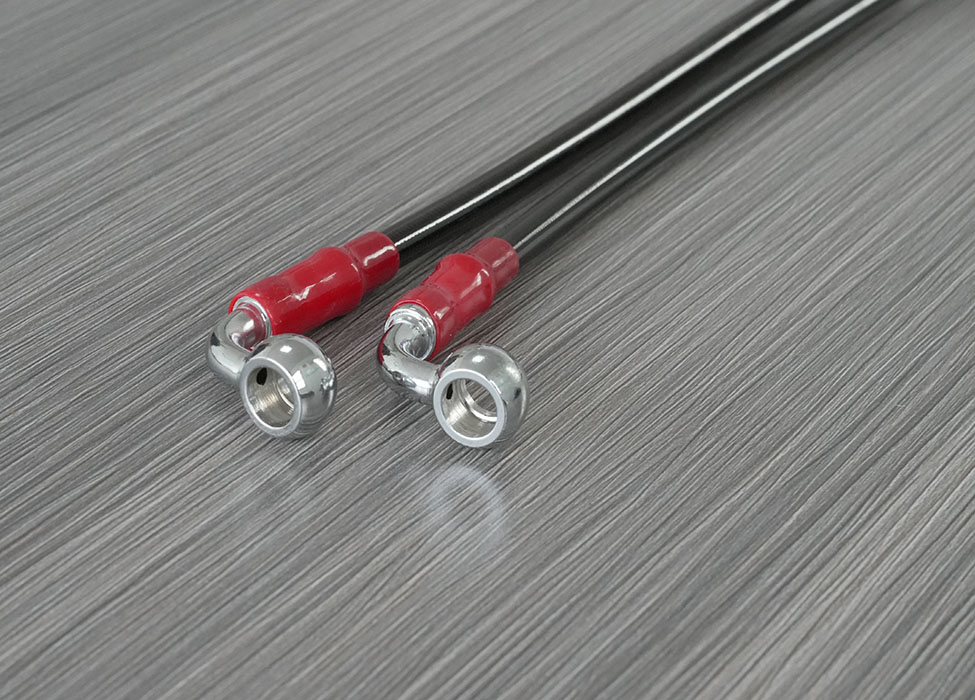
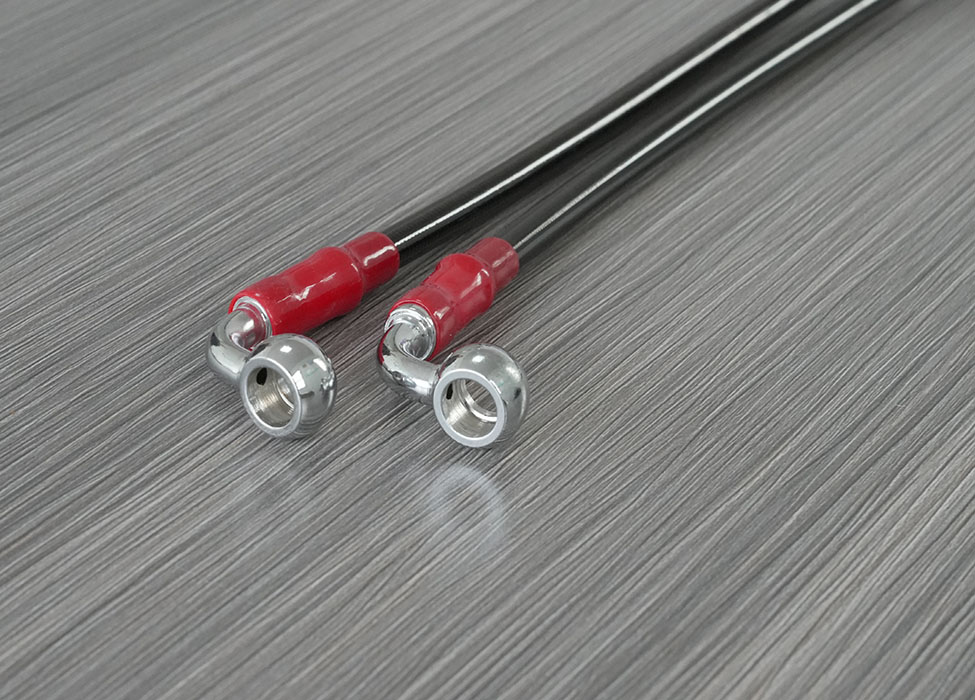
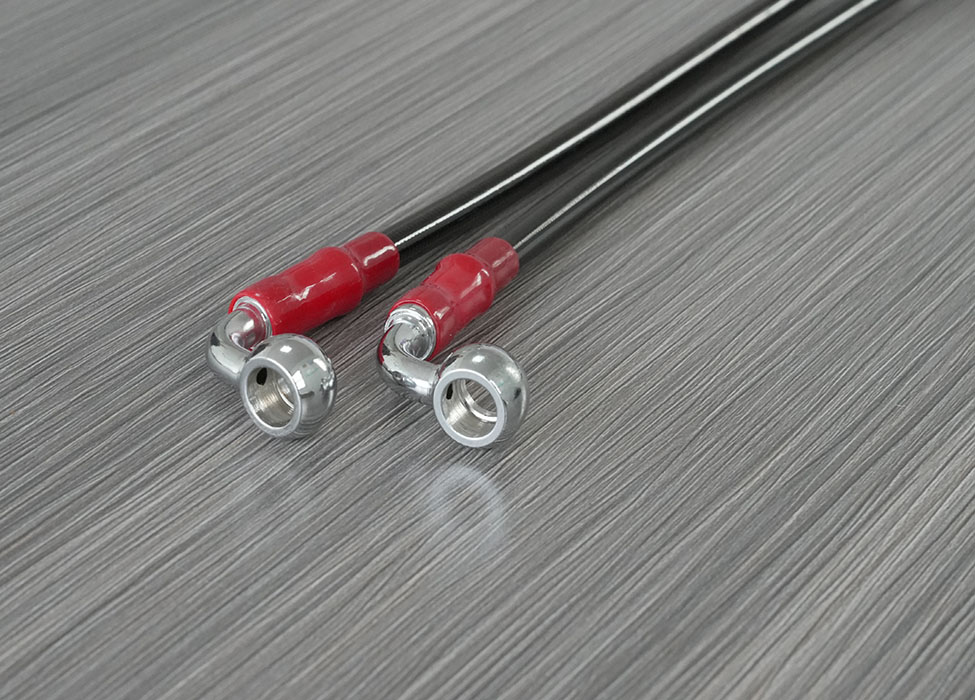
Check fitting material, thread specification, fitting type, angle and orientation.
5. Hose Length
Length should be determined according to the actual installation route rather than simply copying a measurement from another vehicle.
6. Bending Radius
The hose should be installed with a suitable bending radius and should not be forced into a sharp angle.
7. Crimping Quality
The connection between the hose and fitting is an important part of the finished assembly. Consistent crimping is particularly important for bulk production.
8. Batch Consistency
For distributors and importers, repeatability is important. Production batches should maintain consistent hose length, fitting orientation, appearance and assembly specifications.
Daily Maintenance of Car and SUV Brake Hoses
Brake hoses should be included in routine brake system inspection.
- Inspect the hose surface for cracking.
- Check for swelling or abnormal deformation.
- Look for abrasion or rubbing marks.
- Inspect fittings for corrosion.
- Check connection points for leakage.
- Check hose routing around suspension components.
- Confirm that there is sufficient clearance at full suspension movement.
In regions with high humidity, coastal exposure, road salt or heavy rainfall, regular inspection of fittings and outer hose surfaces is particularly important.
Does a Braided Brake Hose Improve Brake Feel?
In suitable applications, a reinforced braided brake hose can reduce the amount of hose expansion under hydraulic pressure compared with some conventional rubber hose constructions.
This can contribute to a more consistent hydraulic response and pedal or lever feel. However, the result depends on the entire braking system, including the master cylinder, caliper, brake fluid, hose construction and installation.
FAQ About Brake Hose Replacement and Modification
How often should brake hoses be replaced?
There is no universal replacement period for every vehicle. Follow the vehicle manufacturer's service recommendations and inspect the actual hose condition. Replace the hose if cracking, swelling, leakage, severe abrasion, corrosion or other damage is found.
Can modified brake hoses really improve braking safety?
A correctly specified brake hose can provide suitable routing and mechanical reinforcement for a modified braking system. However, replacing the hose does not automatically make the entire braking system safer. Correct specification, installation and compatibility with the other brake components are essential.
Are aftermarket brake hoses suitable for all vehicle models?
No. Brake hoses are not universally interchangeable. The hose length, fitting thread, fitting type, fitting angle, brake fluid compatibility and routing must match the specific application.
Our Main Brake Hose Product Range
Our main products cover customized brake hose applications for motorcycles, scooters, passenger cars and SUVs.
- Motorcycle brake lines
- Scooter brake lines
- Car brake lines
- SUV brake lines
- Modified car oil pipe
- Custom brake hose assemblies
We can support different hose lengths, fitting specifications, fitting angles, colors and construction requirements for OEM, aftermarket and bulk purchasing applications.
Custom Brake Hose Manufacturer for OEM and Aftermarket Buyers
If you are not sure which hose specification is suitable for your project, send us your drawing, existing sample, installation photos or required style.
Our engineers can review the hose length, fitting configuration, routing requirements and other technical details before production. This is especially useful for distributors, importers, motorcycle parts suppliers and vehicle modification companies developing their own brake hose products.
Contact our brake hose factory for technical support and custom quotation.