
Modified Brake Lines for Performance Vehicles: Applications, Materials, Fittings and Buying Guide
Brake hose modification is common in motorcycle, scooter, car and SUV aftermarket applications. Some projects simply replace an aged original hose, while others require a completely customized brake line because the vehicle has different calipers, master cylinders, suspension components or brake system layouts.
For these applications, the most important question is not simply whether a brake hose is braided. The hose must be correctly matched to the vehicle, pressure system, brake fluid, fittings, routing and installation environment.
Where Modified Brake Lines Are Used
Motorcycle Performance Applications
Modified brake lines are commonly used on sport motorcycles, street motorcycles, custom motorcycles, touring motorcycles and other vehicles equipped with hydraulic disc brakes.
Typical reasons for replacement or upgrading include aging original hoses, aftermarket caliper installation, master cylinder upgrades, custom handlebars, suspension changes and the need for a different hose length or fitting configuration.
Scooter Applications
Scooters also use flexible hydraulic brake hoses, particularly models equipped with front or rear disc brakes. Customized scooter brake lines can be useful when the original hose needs replacement or when aftermarket braking components are installed.
Car Performance Applications
Cars may use modified brake lines when installing performance calipers, larger brake systems, aftermarket master cylinders or modified suspension components.
SUV Applications
SUVs may require replacement or customized brake hoses because of suspension travel, vehicle configuration or aftermarket modifications. Correct hose length and routing are especially important where suspension movement is significant.
Why Do Buyers Upgrade to Braided Brake Lines?
One of the main technical reasons for using reinforced braided brake hoses is to control expansion of the flexible hose under hydraulic pressure.
Some conventional rubber hose constructions can expand more under pressure as they age or depending on their construction. Reinforcement can reduce this radial expansion and contribute to a more consistent brake lever or pedal feel.
However, the brake hose should not be considered a stand-alone performance upgrade. The final braking performance depends on the master cylinder, calipers, pads, discs, brake fluid, hose routing, installation and overall condition of the system.
Other Reasons for Choosing Modified Brake Lines
- Custom hose length
- Different fitting angles
- Special fitting configurations
- Aftermarket brake caliper compatibility
- Master cylinder conversion
- Custom vehicle appearance
- Performance-oriented brake system projects
- OEM replacement and small-batch production
Motorcycle Brake Lines for Modified Bikes
Motorcycle brake lines are one of the most common products in the aftermarket brake component market. The hose must be able to follow steering and suspension movement while maintaining safe clearance from the wheel, fork and other components.
What Makes a Motorcycle Brake Line Suitable?
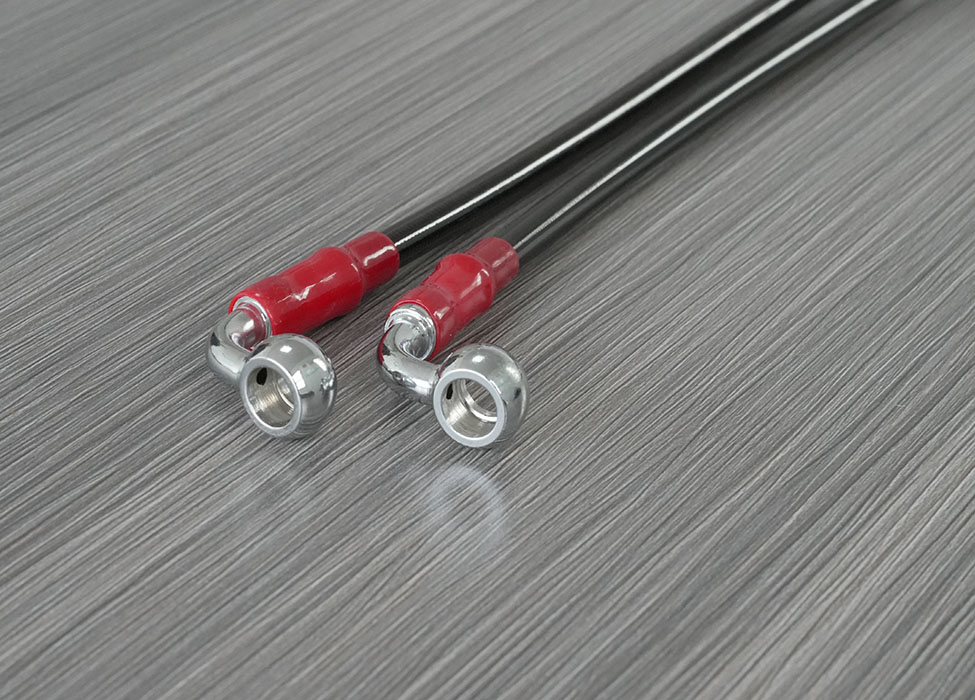
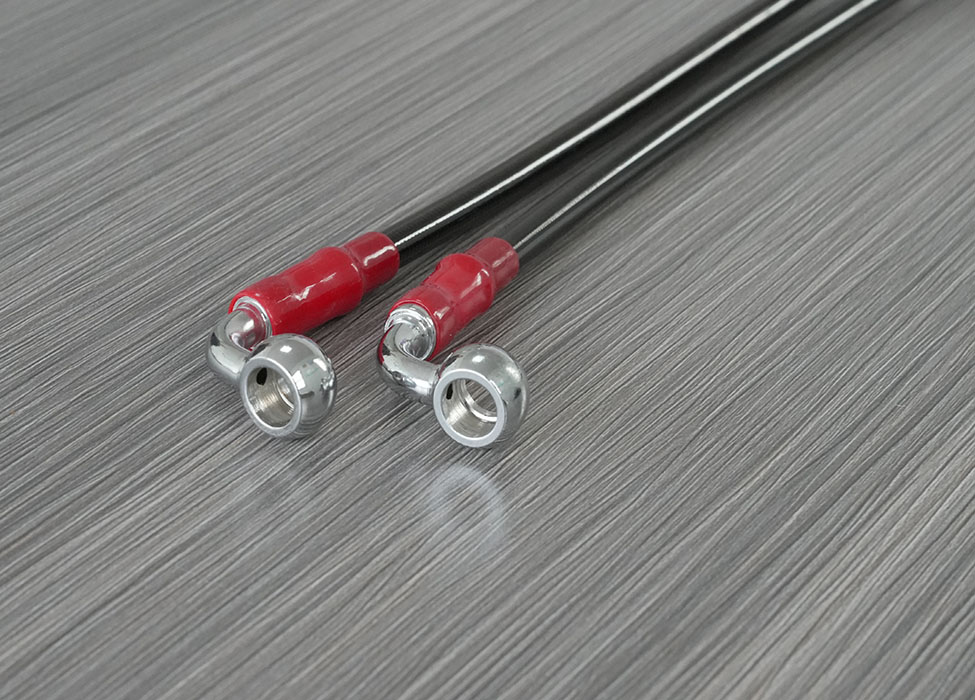
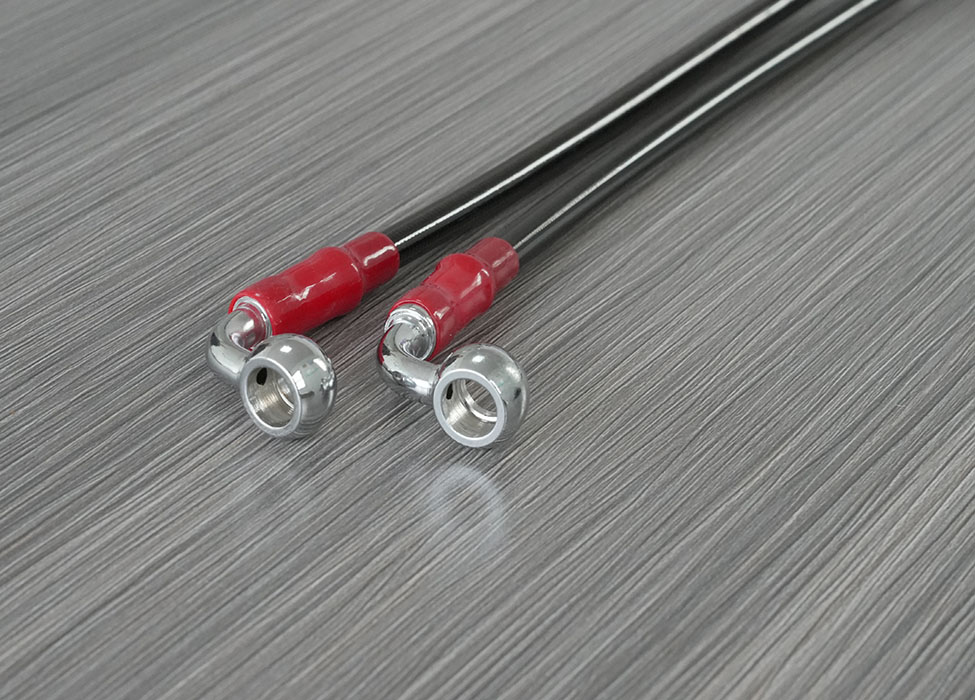
A suitable motorcycle brake line should have the correct length and fitting configuration for the specific motorcycle. Banjo angle, thread specification and fitting orientation should be confirmed before production.
For custom motorcycles, the original OEM length may no longer be suitable after changing handlebars, forks, calipers or master cylinders.
Motorcycle Brake Lines
Our Motorcycle brake lines can be customized for standard replacement and modified motorcycle applications. Customers can provide hose length, fitting specifications, drawings, samples or photos for evaluation.
If you are developing a motorcycle brake hose for your own market, send us your drawing, original sample or fitting photos. We can discuss hose construction, length and fitting requirements before production. Contact us for OEM and wholesale brake line solutions.
Scooter Brake Lines for Urban and Performance Use
Scooter brake systems require compact and flexible hose routing because the front brake assembly moves with the steering system. The hose must have enough movement without becoming excessively loose.
Common Scooter Brake Hose Problems
- Incorrect hose length
- Excessive bending
- Rubbing against surrounding parts
- Incorrect fitting orientation
- Surface cracking or aging
- Leakage around connection points
Scooter Brake Lines
Our Scooter brake lines can be supplied for replacement and aftermarket applications, including customized lengths and fitting configurations.
For a new project, you can send us the original hose or a simple dimensional drawing. If you do not know the exact fitting specification, clear photos of both ends can also help our engineers identify the configuration. Contact us for technical support and quotation.
Car Brake Lines for OEM and Aftermarket Applications
Car brake hoses connect the moving wheel-end components with the fixed hydraulic brake system. Their flexibility allows steering and suspension movement while maintaining hydraulic connection.
When Should a Car Brake Line Be Replaced?
Visible cracks, bulges, abrasion, leakage, damaged protective layers or unusual brake pedal behavior should be investigated. Brake hoses are safety-related components and should be inspected as part of regular vehicle maintenance.
For modified cars, replacement may also be necessary when the original hose no longer matches the new brake system configuration.
Car Brake Lines
Our Car brake lines are available for replacement and customized automotive applications. We can work with importers, wholesalers, workshops and aftermarket brake component businesses.
If you need a specific hose length, fitting angle or customized assembly, send us the drawing, sample or product photos. Contact our factory for technical review and bulk quotation.
Modified Car Oil Pipe for Performance Projects
Modified brake systems often create requirements that cannot be solved with a standard replacement hose. For example, changing the caliper location can change both hose length and fitting angle.
Applications for Modified Car Oil Pipes
- Big brake kit conversions
- Aftermarket caliper upgrades
- Master cylinder replacement
- Suspension modifications
- Track car projects
- Custom brake system layouts
- Small-batch aftermarket product development
Modified Car Oil Pipe
Our Modified car oil pipe products are developed for applications where standard hose specifications are not sufficient.
For custom projects, the most useful information includes hose length, fitting type, thread size, fitting angle, vehicle application and quantity. If you only have a sample or photo, that is also useful as a starting point. Send us your requirements for customization.
SUV Brake Lines for High-Load Applications
SUV brake hose applications require careful consideration of suspension movement, vehicle weight, hose routing and environmental exposure. A suitable hose should maintain adequate flexibility while remaining protected from mechanical damage.
Important SUV Brake Hose Considerations
- Suspension travel
- Hose length
- Fitting orientation
- Wheel and suspension clearance
- Heat exposure
- Road debris and abrasion
- Brake fluid compatibility
SUV Brake Lines
Our SUV brake lines can be manufactured for replacement, aftermarket and customized applications.
For overseas buyers, we can discuss product specifications, bulk orders, packaging, private-label requirements and repeat production. Send us your sample, drawing or photos so we can confirm the configuration. Contact us for a customized quotation.
How to Select a Modified Brake Hose
1. Start With the Brake System
Identify the master cylinder, caliper and existing hose arrangement. If the brake system has been modified, provide information about the new components rather than relying only on the original vehicle model.
2. Measure the Required Length
Measure according to the actual installation route. The hose should have enough length for full steering and suspension movement without excessive slack.
3. Confirm Fitting Type and Thread
Fitting compatibility is one of the most important parts of a customized brake hose. Check thread size, thread pitch, banjo dimensions, angle and orientation.
4. Choose the Correct Hose Construction
Depending on the application, buyers may choose rubber, nylon, PTFE or reinforced braided constructions. Material selection should be based on the actual brake fluid, pressure, temperature and flexibility requirements.
5. Consider the Outer Protection
For vehicles exposed to road dirt, water, vibration or frequent movement, the outer protection should be selected according to the installation environment.
What Should International Buyers Ask a Brake Hose Manufacturer?
Technical Questions
- What hose materials are available?
- What fitting types can be supplied?
- Can the hose length be customized?
- Can fitting angles be customized?
- Can different colors be produced?
- Can samples be developed before bulk production?
- Can OEM or private-label packaging be supplied?
Production Questions
- What is the MOQ?
- What is the sample lead time?
- What is the normal production lead time?
- How is crimping quality controlled?
- How are fittings protected during shipment?
- Can repeat orders maintain the same specification?
These questions are particularly useful for importers and distributors because brake hose quality is not only about the appearance of the finished product. Dimensional consistency and fitting configuration are also important for repeat orders.
Brake Hose Maintenance for Modified Vehicles
Inspect the Hose Regularly
Check the entire hose for cracks, cuts, bulges, abrasion and unusual soft areas. Pay particular attention to areas near fittings and points where the hose changes direction.
Check for Rubbing
After installation, inspect the hose routing through the full steering and suspension movement. The hose should not continuously contact sharp edges or moving components.
Check Connection Areas
Inspect banjo fittings, connectors and crimped sections for leakage or visible damage. Any suspected brake fluid leak should be addressed before normal vehicle use.
Do Not Ignore Changes in Brake Feel
A sudden change in brake lever or pedal feel should not automatically be blamed on the brake hose. The entire braking system should be inspected, including brake fluid, air in the system, calipers, master cylinder and hose condition.
FAQ About Modified Brake Lines
How often should brake hoses be replaced?
There is no single replacement period that applies to every vehicle and hose. Actual service life depends on material, age, temperature, road conditions, movement and installation. Regular inspection is important.
Do stainless steel braided brake lines improve braking performance?
A reinforced braided construction can reduce hose expansion under hydraulic pressure compared with some conventional hose constructions. This can contribute to a firmer or more consistent brake control feel. However, the complete braking system determines the actual result.
Are modified brake lines suitable for all vehicle models?
No. Brake lines are application-specific components. The hose length, fittings, thread, angle, routing and brake fluid compatibility must all be checked before installation.
Can I order a customized brake hose if I do not know the exact specification?
Yes. An original hose, sample, drawing, dimensions or clear photographs can be used as a starting point. For complicated modified systems, a technical drawing is especially useful.
Can you produce brake hoses for wholesale orders?
Yes. We work with importers, distributors, wholesalers, workshops and aftermarket brake component businesses. Customized specifications and repeat production requirements can be discussed before order confirmation.
Our Brake Hose Product Range
Our main application range includes Motorcycle brake lines, Scooter brake lines, Car brake lines, Modified car oil pipe and SUV brake lines.
As a brake hose manufacturer, we can support different hose constructions, lengths, fitting configurations, colors and customized assemblies for international aftermarket and OEM customers.
Send Us Your Brake Hose Specification
If you are developing a new brake line, replacing an existing hose or sourcing customized brake hoses for your market, you can send us the information you already have.
A drawing is ideal, but an original sample, product photo, fitting photo, dimensions or vehicle application can also help us evaluate the project.
Contact us for customized brake lines, OEM development, samples and wholesale quotations.