

Brake Hose Bending Symptoms: How to Identify a Bent or Improperly Routed Brake Line
A brake hose is designed to carry hydraulic brake fluid under pressure while allowing controlled movement between fixed and moving components. However, excessive bending, twisting, sharp routing or an incorrect installation angle can affect the hose's working condition.
For motorcycles, scooters, passenger cars and SUVs, a brake hose should not be treated as a simple flexible tube. The bending radius, hose length, fitting orientation, reinforcement structure and routing position all need to match the actual brake system.
For modified vehicles, these factors become even more important because aftermarket brake systems may use different calipers, master cylinders, handlebars, suspension components or wheel configurations.
Common Symptoms of Excessive Brake Hose Bending
1. The Brake Hose Has a Sharp Kink
A visible kink is one of the easiest signs to identify. Instead of forming a smooth curve, the hose suddenly folds at one point.
A sharp bend can restrict the internal passage of the hose and create unnecessary stress on the reinforcement layer. If the hose repeatedly moves around the same point, the damage can become more serious over time.
2. The Hose Twists During Steering or Suspension Movement
On motorcycles and scooters, brake hoses may move when the handlebars turn from left to right. On vehicles with moving suspension components, the hose may also change position as the suspension compresses and extends.
If the hose twists instead of following a controlled bending path, the fitting area and hose body can experience additional mechanical stress.
3. The Outer Cover Shows Abnormal Wear
Rubbing marks, flattened sections, surface abrasion or localized damage can indicate that the brake hose is contacting another component.
Common contact points include the wheel, fork, frame, suspension components, brackets and other moving parts.
4. Brake Hose Movement Is Restricted
A properly routed hose should have enough freedom to accommodate normal steering or suspension movement without becoming excessively loose.
If the hose is too short or installed with an unsuitable fitting angle, it may become tight when the steering is turned or the suspension moves.
5. The Brake Hose Looks Stressed Around the Fitting
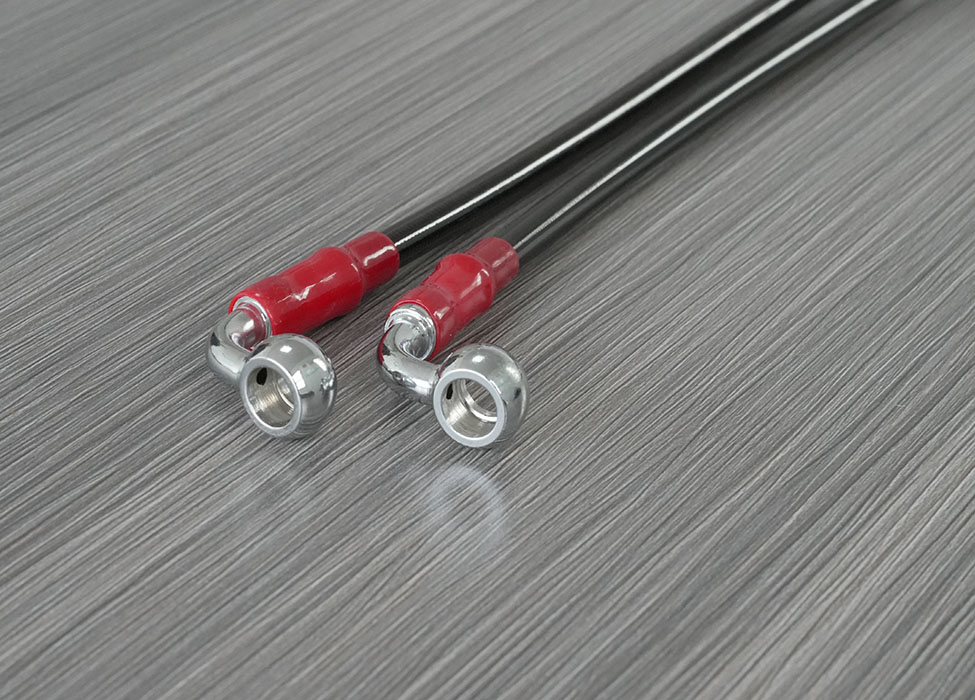
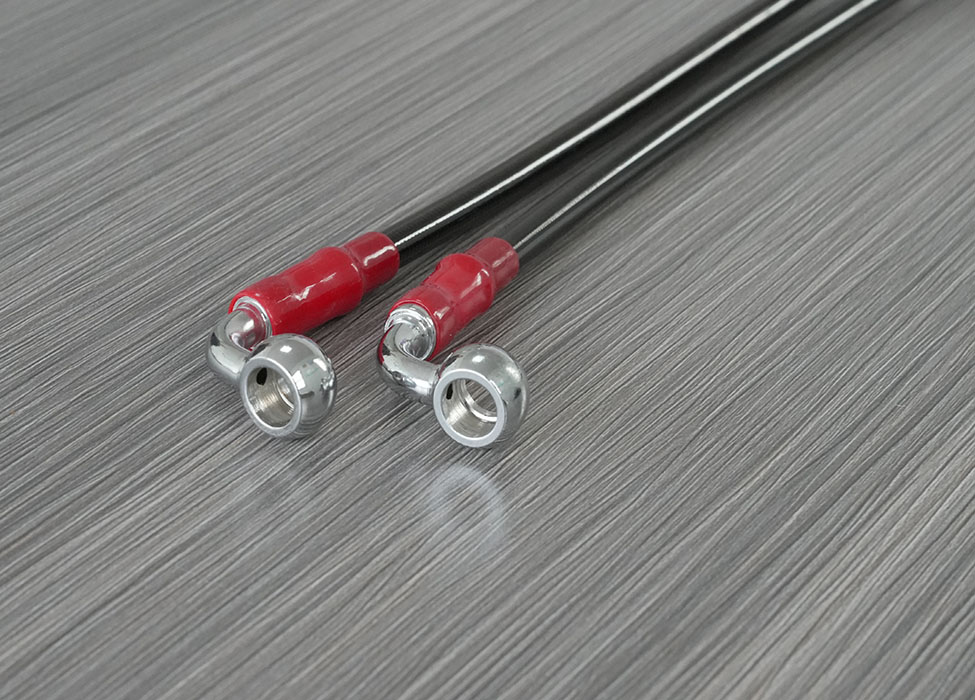
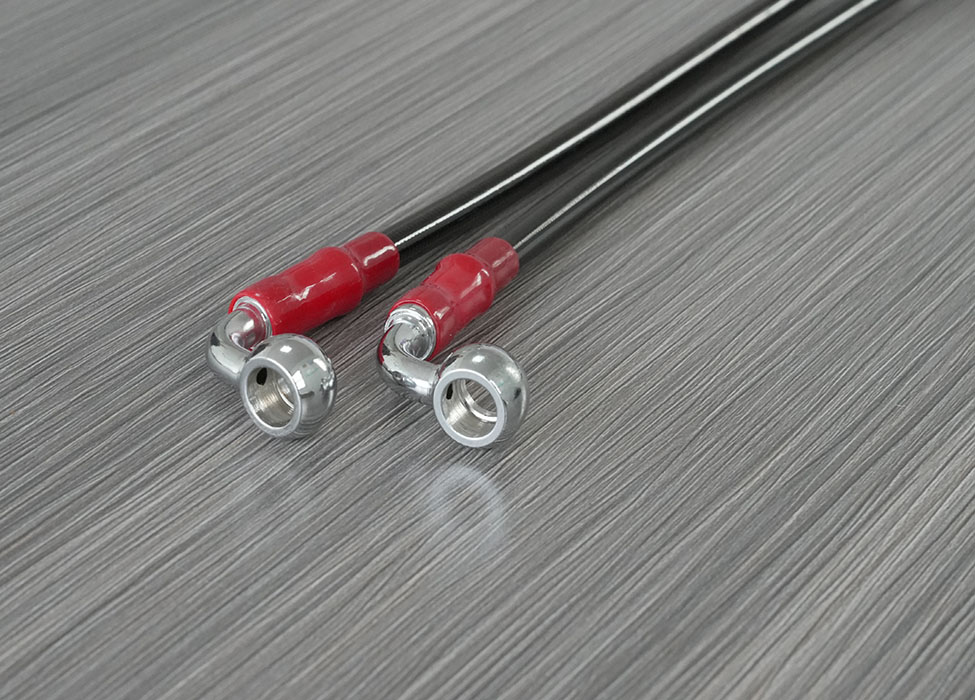
Another common symptom is excessive bending immediately next to the crimped fitting. This area should normally transition smoothly from the hose body to the fitting.
A hose that is forced into a sharp angle directly after installation can place unnecessary stress on the crimped connection.
Why Does a Brake Hose Bend Incorrectly?
Incorrect Hose Length
A hose that is too short may become stretched during steering or suspension movement. A hose that is excessively long may form unnecessary loops and contact surrounding components.
For custom brake hose production, measuring the actual installation route is therefore important before determining the final hose length.
Incorrect Fitting Orientation
The hose fitting angle can have a significant effect on the final routing position. Even when the hose length is correct, an unsuitable fitting orientation can force the hose into an unnatural bend.
For modified motorcycles and cars, the fitting angle should be confirmed together with hose length, thread specification and installation position.
Small Bending Radius
Every hose construction has a practical minimum bending radius. Forcing the hose into a tighter curve than its design allows can increase mechanical stress.
This is particularly important when selecting stainless steel braided brake hoses for modified applications.
How to Inspect Brake Hose Bending
Before driving or riding, visually inspect the entire brake hose from the master cylinder to the caliper.
- Check whether the hose forms a smooth curve.
- Look for sharp kinks or flattened sections.
- Check for twisting near the fittings.
- Turn the motorcycle handlebar fully from side to side.
- Check suspension movement where applicable.
- Make sure the hose does not contact the wheel or other moving components.
- Inspect the fitting and crimping area for abnormal stress.
- Check for abrasion, cracking, corrosion or fluid leakage.
Why Modified Brake Hoses Can Be Useful for Custom Brake Systems
Factory brake hoses are normally designed around the original vehicle configuration. Once the vehicle is modified, the original hose length and fitting orientation may no longer provide the best routing.
A customized brake hose can be produced according to the required hose length, fitting specification, fitting angle, color and construction.
For suitable applications, a reinforced aftermarket brake hose can also provide better control of hose expansion compared with a conventional rubber hose construction. However, the complete braking system and installation quality remain important.
Brake Hose Solutions for Different Vehicle Applications
Motorcycle Brake Lines
Motorcycle applications often require compact routing around the handlebar, front fork and caliper. Correct length and fitting orientation are particularly important because the hose must accommodate steering movement without excessive tension or twisting.
Our Motorcycle brake lines can be customized for different motorcycle configurations, hose lengths, fitting styles and installation requirements.
If you are developing brake lines for aftermarket motorcycle applications, providing a sample or drawing can make the specification process more accurate.
Scooter Brake Lines
Scooters have different routing requirements from conventional motorcycles because of their compact body structure and handlebar arrangement.
Our Scooter brake lines are suitable for customized applications where hose length, fitting position and routing need to match the vehicle design.
Modified Car Oil Pipe
Modified vehicles may use upgraded brake calipers, master cylinders or other braking components. In these cases, the original brake hose dimensions may not match the modified installation.
Our Modified car oil pipe solutions can be manufactured according to customer drawings, samples and technical requirements.
Car Brake Lines
For passenger cars, correct routing is important around the suspension, steering system and wheels. A customized hose can help match the actual installation route when standard replacement dimensions are not sufficient.
Our Car brake lines are available for different vehicle applications and customized specifications.
What Should Buyers Check Before Ordering Custom Brake Hoses?
- Required hose length
- Inner tube material and brake fluid compatibility
- Reinforcement construction
- Outer covering material
- Fitting material
- Fitting thread specification
- Fitting angle and orientation
- Required bending radius
- Working pressure and test requirements
- Required color and appearance
- Packaging and labeling requirements
- Sample or technical drawing availability
Routine Brake Hose Maintenance
Brake hoses should be inspected during routine brake system maintenance. Do not only inspect the hose when a braking problem appears.
Check the hose surface for abrasion, cracking, swelling, corrosion and deformation. Also inspect the fittings and connection points for leakage or abnormal movement.
When the vehicle is modified, recheck hose routing after suspension, steering or brake component changes.
FAQ About Brake Hose Bending
How often should brake hoses be replaced?
There is no single replacement interval that applies to every vehicle. Follow the vehicle manufacturer's maintenance recommendations and inspect the actual condition of the hose. Replacement may be necessary earlier if the hose shows cracking, swelling, abrasion, leakage, corrosion or other damage.
Can modified brake hoses improve braking safety?
A properly specified and correctly installed brake hose can improve hose routing and, in suitable applications, provide more controlled reinforcement than a conventional rubber hose. However, changing the hose alone does not guarantee improved braking safety. The master cylinder, caliper, brake fluid, fittings, installation and complete braking system must all be considered.
Are aftermarket brake hoses suitable for every vehicle?
No. Brake hoses should be selected according to the vehicle, brake system, hose dimensions, fitting specifications and installation requirements. Custom hoses are particularly useful when the original vehicle configuration has been modified.
Factory Direct Custom Brake Hose Service
Our main product range includes Motorcycle brake lines, Scooter brake lines, Car brake lines, SUV brake lines and Modified car oil pipe solutions. We can also support different hose constructions, fitting specifications, lengths, colors and custom requirements.
If you are not sure about the correct hose specification, you can send us your drawing, existing sample, photos or installation requirements. Our technical team can help check the hose structure, length and fitting configuration before production.
Contact our brake hose factory for technical support and custom quotation.